
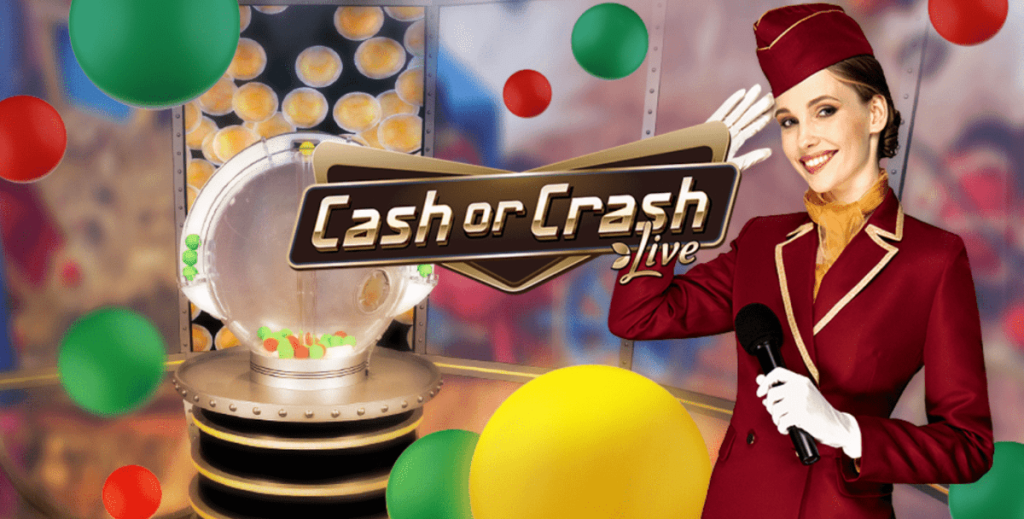
As an detailed reviewer who has devoted significant time analyzing live casino games, I find the concept of Return to Player (RTP) in a game like safe cash or crash live particularly intriguing. For Canadian players, grasping this figure isn’t just about observing a percentage; it’s about grasping the unique risk-reward mechanics that shape every round. This game, with its live host and escalating multipliers, presents a exciting deviation from standard slots or table games. My goal here is to break down the RTP, clarify how the game’s volatility and mechanics directly influence your potential returns, and provide a straightforward, practical expectation for your gameplay. Let’s delve into what makes this game’s payout structure tick and how you, as a player, can manage its exciting pressures.
Published RTP and Volatility for Cash or Crash Live
Now, let’s get to the specific numbers. Based on my analysis of the game’s rules and published data from respected casinos providing it in Canada, Cash or Crash Live typically features a Return to Player (RTP) of roughly 96.50%. This is a extremely attractive rate, sitting above the average for many online slots and equivalent to favorable table game rules. This figure is calculated by the game provider, Evolution, taking into account all possible crash points and the related multipliers, and is validated by independent testing agencies. It verifies that, mathematically, the game is designed to be fair and provides good long-term value compared to other casino offerings.
Nevertheless, the RTP tells only half the story. The volatility of Cash or Crash Live is clearly high. Volatility relates to the frequency and size of payouts. A high-volatility game means wins can be more sporadic but likely larger when they occur, resulting in notable swings in your bankroll. In this game, the “crash” events represent total losses, while successful cash-outs at high multipliers deliver sizeable wins. This produces a “feast or famine” pattern. You must be monetarily and mentally ready for the possibility of several consecutive losses while anticipating for a high-multiplier cash-out to hit. Your session RTP will be very responsive to these swings.
Cash or Crash Live Title: Main Game Mechanics Explained
To truly grasp the RTP, you should first comprehend how the game functions. Cash or Crash Live is a game show type live dealer experience where you place a bet before a round begins. A live host then launches a virtual rocket through a multiplier field, which includes green safe zones and red crash zones. The rocket goes through a series of gradually higher multipliers. Before each new multiplier is displayed, you must choose: cash out and claim the current multiplier on your bet, or let it ride for a shot at a higher one. The risk is that if the rocket hits a red “Crash” zone before you cash out, you forfeit your bet for that round. This produces a intense, player-driven decision point that is fundamental to the experience.
The Tension of the Cash-Out Decision
The entire strategic weight of the game rests on your cash-out timing. There is no optimal moment determined by the game; it is a pure test of risk tolerance. The live host builds anticipation, and the visual of the rocket climbing through multipliers is incredibly engaging. This mechanic means that two players with identical bets can have significantly different outcomes based only on their personal decisions. One might cash out early at a 2x multiplier steadily, while another might go for the 10x or 25x multipliers, jeopardizing a total loss more often. Your personal RTP in this game is, therefore, somewhat in your hands, which is a unusual and compelling aspect for a live dealer title.
Game Show Features and Pacing
Beyond the core wager, the production value is top-notch. The set is colorful, the host is charming, and the pacing is crafted to keep adrenaline high. Rounds are comparatively quick, allowing for many decisions in a short session. This fast pace affects how you feel volatility. You’ll confront the cash-out dilemma over and over, which can lead to emotional decision-making. As a reviewer, I suggest determining a personal strategy for multiplier targets before you start playing and holding to it as strictly as possible, as the live entertainment can tempt you to depart from sensible bankroll management.
Comprehending RTP in Live Casino Games
Before we concentrate on Cash or Crash Live specifically, it’s essential to define what RTP represents in the live casino setting. RTP, or Return to Player, is a calculated percentage indicating the money wagered on a game that is anticipated to be paid back to players over an lengthy period. For example, a 96% RTP suggests that for every $100 wagered, $96 is expected to be returned as winnings. However, this is a long-term statistical average across millions of rounds, not a guarantee for a single session. In live games, this determination integrates the built-in rules and odds, as with in a digital game, but is carried out in real-time by a human dealer. This adds a layer of trust for players, as the outcome is determined by physical game elements—like the draw of balls or the crash of a rocket—rather than a digital random number generator alone.
The actual implication for you, a Canadian player, is that RTP acts as a standard for game fairness and potential value. A elevated RTP generally indicates a lower house edge over time. It’s a key metric I consistently evaluate, as it permits for a more knowledgeable choice about where to place your bankroll. Nevertheless, with live games featuring interactive and bonus elements like Cash or Crash, the RTP story becomes more complex. The reported figure is a composite of all possible game outcomes, adjusted by their probability. As a result, your personal experience can vary significantly in the short term due to volatility, which is why grasping the game’s mechanics is just as crucial as being aware of the top-line RTP percentage.
Evaluating RTP to Different Popular Live Casino Games in Canada
To put into perspective the value of Cash or Crash Live’s ~96.50% RTP, it’s useful to compare it to other live dealer essentials available to Canadian players. Classic Blackjack, depending on specific rules and your playing strategy, can offer an RTP often varying from 99.5% down to around 98%. Live Roulette (European single-zero) delivers a 97.3% RTP. Live Baccarat (betting on Banker) is typically around 98.94% RTP. These games have lower volatility and more predictable outcomes based on fixed odds. In contrast, many live game shows like Dream Catcher or Monopoly Live have RTPs in a similar range to Cash or Crash (often 96%-96.5%) but with varying volatility structures and bonus mechanics.

This comparison demonstrates that Cash or Crash Live’s RTP is normal for its game-show genre but generally lower than optimal-play table games like Blackjack or Baccarat. The trade-off is the unique entertainment value and the player agency it offers. You are not just anticipating for a card or a wheel result; you are actively making a high-stakes decision every few seconds. For many players, this interactive thrill validates the slightly higher house edge compared to traditional tables. It’s less about pure mathematical refinement and more about entertaining entertainment with a solid payout potential.
Tactical Considerations for Canadian-based Players
Given the game’s high volatility and decision-based nature, strategy is more about finding a “winning system” and rather about intelligent bankroll and psychological management. First, always treat your buy-in as entertainment funds you are prepared losing. Due to the potential for rapid consecutive crashes, I recommend a bankroll that can handle at least 20-30 rounds at your preferred bet size. This prevents you from being eliminated by a brief negative variance before you even have a opportunity to make a significant cash-out decision. Canadian players should also fully utilize of the game’s demo mode if accessible, to sample the tension without economic risk.
Establishing Personal Multiplier Limits
A useful tactic is to set pre-determined cash-out points before the round starts. For example, you might choose you will always cash out at 5x, or use a ladder approach (cash out half at 3x, the rest at 10x). The key is to follow this plan despite the host’s urging or the thrill of the moment. Deviating on a whim is where losses can escalate. Furthermore, reflect on the law of diminishing returns. Chasing the rare 500x or 1000x multiplier is a long-shot probability. Developing a strategy around the more commonly occurring mid-range multipliers (like 5x to 25x) can lead to a more consistent and pleasurable session.
Utilizing Bonuses Wisely
If you use a casino bonus to play Cash or Crash Live, be acutely aware of the wagering requirements. Volatile games can be tricky for clearing playthrough conditions, as your balance can fluctuate dramatically. A large win might assist you meet requirements quickly, but a streak of crashes could also exhaust your bonus funds before you fulfill them. Examine the terms carefully, as some bonuses may cap or count differently to live dealer games. A prudent approach is to use lower bonus funds or free bets on this game, keeping your main deposit for more predictable gameplay if your goal is to clear a bonus.
The way Game Decisions Directly Impact Your Personal RTP
This is the most critical section for your hands-on understanding. The published RTP of ~96.50% presumes a hypothetical infinite playstyle that somehow magically knows when to cash out before every crash—which is unachievable. In reality, your personal effective RTP is a result of your cash-out strategy. If you routinely cash out at very low multipliers (like 1.5x or 2x), you will win more frequently but your overall return may be lower than the mathematical maximum because you’re not capturing enough value from the higher multipliers that the game’s mathematics incorporates.
The High-risk vs. Conservative Player
An aggressive player aiming for 10x, 25x, or even 50x multipliers will experience extreme volatility. They will face many more crashes (losses), but a single successful high-multiplier cash-out can recover many losses. Their session RTP could significantly exceed 96.50% or fall far below it. A cautious player cashing out at 2x or 3x will have higher frequency smaller wins, leading to a less volatile session but potentially a lower long-term return if they fail to capitalize from the game’s profitable upper tiers. Your decision profile actually dictates the equation for your returns.
Finding a Moderate Approach
From my analytical perspective, a balanced strategy often works best for Canadian players looking to extend playtime and manage risk. This might involve dividing your bet or your session into distinct approaches. For instance, you could use a portion of your bankroll to pursue a cautious strategy on one bet, while using another to take sporadic aggressive shots. There’s no statistically “correct” strategy that beats the house edge, but by being conscious of how your choices change the payout frequency and size, you can match the game’s experience with your personal risk appetite and budgetary goals for the session.
Popular Misunderstandings About RTP in Crash-Style Games
A common misunderstanding is that the likelihood of a crash grows the longer the rocket flies. In truth, operating under a mathematically fair model, each subsequent multiplier interval is an standalone outcome (or close to autonomous in its programming). The rocket does in no way have a “memory”; hitting 10x does not automatically make a crash at 11x more probable. The odds are readjusted at each stage based on the game’s underlying algorithm crafted to deliver the goal RTP. This is vital to understand, as it prevents the gambler’s fallacy of thinking “it’s due to crash” after numerous high multipliers, or on the flip side, that it’s “on a hot streak.”
Another significant error is mistaking RTP with session outcome. As I’ve stressed, 96.50% RTP is not a certainty for your short gaming period. You could secure double your money or burn through your full balance. The RTP manifests over vast numbers of rounds globally. Furthermore, some players mistakenly believe their cash-out skill can always beat the house edge. While your choices affect your personal variance, the game’s fundamental mathematics ensures the house keeps its edge over the long term. Your aim should be to enhance enjoyment and manage your risk within that context, not to discover a legendary “beat the game” strategy. Recognizing these realities will lead to a healthier and more enjoyable gaming session.